advertisement

Morson Group grows specialist engineering arm with deal for Orange Solutions

advertisement

From left, Chris Burke (managing director, Morson Projects), Tony Hynes (managing director, Orange Solutions), Ged Mason (CEO of Morson Group), Paul Ward (Ematics associate director), Gareth Beck (director, Morson Projects)

Recruitment giant Morson Group has expanded its engineering services business by buying a Greater Manchester company.

Specialist recruiter Morson was founded in Salford in 1959 and has grown into a £1.3bn turnover business with more than 1,500 global employees.

Now it has acquired Trafford Park-based Orange Solutions, a niche safety and control systems engineering firm. Morson says Orange will sit alongside its existing engineering-focused businesses including Morson Projects, Waldeck and Ematics, which work across sectors including aerospace, marine, defence, and energy.

Orange Solutions has worked on projects in the UK and overseas in industries including oil & gas, marine,offshore renewables, petrochemicals, pharmaceutical, transport infrastructure, and heavy industry.

The company has a long-standing relationship with Ematics and Morson Projects, and its new parent group says: “The strategic investment by Morson will enable Orange Solutions to maximise its potential for growth, supported by the Group’s existing engineering businesses and wider portfolio, while benefitting Morson’s clients with niche expertise in a specialist and safety critical field.”

Orange Solutions’s founder and managing director, Tony Hynes, will remain in post, alongside the company’s experienced team of engineers.

Paul Ward, associate director of Morson’s Power and Control Division, has worked on projects with Mr Hynes for three decades and worked on a number of projects with Orange Solutions.

Mr Ward said: “The knowledge, skills and experience offered by Orange Solutions are in high demand, thanks to increasing use of automation across a wide range of industries, along with the need to control extremely complex systems and manage safety.”

Morson Group CEO, Ged Mason, said: “The synergy between Orange Solutions’ track record and client base, and our Ematics business will enable us to offer clients even more expertise from within the Morson Group, with additional capacity and capabilities to resource projects effectively.”

Tony Hynes added: “Orange Solutions has grown by providing the knowledge and experience needed to deliver complex projects on time. With so much potential in our sectors, the time was right for us to seek a strategic partner that can support our continued growth. The synergy and existing relationship with Morson, which is based locally to our existing HQ, made them an ideal fit.

“As part of the Morson Group, we will continue to build on our reputation, while enabling our clients to tap into the 1,200 engineers employed across Morson’s engineering division.”

Morson was advised by Beyond Corporate and RSM UK Corporate Finance LLP.

advertisement

HMRC sees UK firms overpaying billions in corporation tax as complex system hits businesses

UK businesses overpaid a staggering £14.2bn in corporation tax last year, a report by a prominent accountancy firm has revealed, highlighting the ongoing challenges posed by the nation's intricate financial system. Chancellor Rachel Reeves has assured entrepreneurs and investors of her support for British business, despite economic pressures from President Trump's tariffs and tax increases announced at the Autumn Budget, as reported by City AM. However, a complex tax regime is causing deep-seated issues, with many firms overpaying HMRC, as per findings by UHY Hacker Young. The accountancy firm's research, derived from a Freedom of Information request, indicates that UK companies overcompensated the government by £14.2bn in corporation tax in the year ending April, affecting approximately 400,000 businesses. The study notes that the overpayment for the fiscal year 2024 to 2025 was 21 per cent higher than the previous tax year. Corporation tax, which deducts a portion from company profits, operates on a tiered system, with the principal rate set at 25 per cent for businesses earning profits above £250,000. UHY Hacker Young's accountants argue that HMRC's approach often results in firms paying excessive corporation tax due to potential penalties if profits fall short of projections. This situation can lead to "significant cash flow problems," the researchers warn, as it falls upon companies to reclaim any overpaid funds. "Overpaying corporation tax is a double hit for struggling businesses," remarked Brian Carey, a partner at UHY Hacker Young. "Not only do they suffer from lower-than-expected profits, but they also see vital cash locked up with HMRC." This statement comes on the heels of a separate report by Thomson Reuters which highlighted that businesses now contribute to over a quarter of all UK tax receipts. The surge in corporation tax receipts has been a significant factor, with the government now collecting over £200bn through this tax. Concurrently, concerns are being raised about HMRC potentially underestimating the extent of tax evasion.

Read more
Nikhil Rathi secures another five-year term as FCA chief amidst UK regulatory overhaul

Nikhil Rathi has been reappointed as the chief executive of the Financial Conduct Authority (FCA) for a further five years, tasked with the government's new mandate to cut back on unnecessary and repetitive regulation, as confirmed by the Chancellor. Rathi, who previously served as a Treasury official and the CEO of the London Stock Exchange, will continue his leadership at the FCA, the UK's principal financial regulator, as reported by City AM. Should he complete this term, Rathi's tenure at the helm of the FCA will reach a full decade. The Chancellor has chosen to maintain stability in the role, highlighting that Rathi's contributions have been "crucial" to the government's ambitious regulatory reform efforts aimed at streamlining the UK's regulatory framework to eliminate perceived impediments to economic expansion. On Christmas Eve, Rachel Reeves and Keir Starmer issued a directive to the heads of the UK's ten leading regulatory bodies, urging them to "tear down the regulatory barriers" they believe are constraining economic progress. This initiative to orientate the UK's regulatory bodies towards promoting growth has led to the departure or removal of several regulatory leaders, including those at the Competition and Markets Authority and the Solicitors Regulation Authority. The campaign has also triggered a significant reshuffle within the financial regulatory landscape, exemplified last month by the merger of the Payments Systems Regulator with the FCA, which aims to minimise redundant regulatory obstacles for businesses. Rathi will oversee the seamless integration of the merger. Upon hearing of his reappointment, he commented: "I am honoured to be reappointed by the Chancellor. The FCA does vital work to enable a fair and thriving financial services sector for the good of consumers and the economy." In the previous month, both the FCA and the Bank of England's Prudential Regulation Authority abandoned their initiatives to regulate firms' diversity, equity and inclusion (DEI) performance. Reflecting on these actions and other measures to reduce regulatory burden, Rathi stated: "I am proud of the reforms we have delivered to support growth, bolster operational effectiveness, set higher standards and to keep our markets clean and open." Reeves expressed her approval, saying: "Nikhil Rathi has been crucial in this government's efforts to reform regulation so it supports growth and boosts investment – I am delighted he will be continuing his leadership of the FCA."

Read more
Banks face turmoil as HSBC and Barclays shares plummet amid escalating global trade war

The 'Big Five' banks on the FTSE 100 were engulfed in losses on Wednesday as tensions escalated in the global trade war. China retaliated by hiking its tariff on US goods to 84 per cent, a response to President Donald Trump's 50 per cent levy that came into effect today, pushing China's total import tax to a staggering 104 per cent, as reported by City AM. HSBC shares took a hit of over four per cent due to Beijing's countermove. Barclays and Standard Chartered also felt the heat, with their shares dipping nearly five per cent. Stocks had already been under pressure in early trading as Trump showed no intention of retreating from his tariff strategy. Domestically-focused lenders Lloyds and Natwest saw their shares fall nearly three and four per cent respectively. Russ Mould, investment director at AJ Bell, commented: "Yesterday's fragile recovery in stocks has been shattered by renewed selling as reciprocal tariffs on what the Trump administration regards as the 'worst offenders' comes into effect." "Investors had initially taken some positives from a willingness in the White House to negotiate with Japan and Israel but an escalation with China triggered another sell-off on financial markets." Bloomberg calculations on Tuesday revealed that more than $700bn (£546bn) of global bank stocks' market value has evaporated since Trump's 'Liberation Day.' HSBC, with its Asia-centric operations driving losses, has alone seen almost $30bn (£23bn) wiped off its value. Britain's prime lending institutions are scheduled to unveil their half-year financial reports towards the end of July, a period that may bring unwelcome news to investors as they absorb the repercussions. Shore Capital's equity analyst Gary Greenwood commented on the anticipated content of the reports, indicating they are expected to mirror "volatility in capital markets". He elaborated: "IPO's that were going to happen, impact in market related activity, impact in wealth management areas – that's where you'll feel it first." Greenwood also predicted lenders' future guidance would likely suffer due to tariffs. He explained further, saying: "On an accounting basis, banks might start to add a bit to their provisions." "More uncertainty could make them more cautious about lending and risk appetite could change to not push as hard in terms of growth." Such developments pose additional challenges for Chancellor Rachel Reeves, who has been actively advocating for banking leaders to help bolster growth within the UK.

Read more
AJ Bell's trading update reveals boom in new customers and assets

AJ Bell has reported a significant growth with assets under administration soaring to £89.5bn by the end of 2024, an indication of the investment platform's appealing eight per cent customer increase over the year. The trading platform enjoyed a 17 per cent surge in assets throughout the previous year, with a three per cent rise in the final quarter, according to its latest trading update, as reported by City AM. The customer base has nearly reached 561,000, largely owing to its direct-to-consumer platform, which saw a four per cent uptick in users during the year's last quarter. The rate at which advised customers expanded was more modest, experiencing a two per cent growth within the same period, bringing the total to 174,000. "During the quarter we continued to see the benefits of our dual-channel model and the high-quality propositions that we offer to both the advised and D2C market segments," commented AJ Bell's chief Michael Summersgill. The investment firm witnessed robust net inflows across both its platform and investments operations during the final quarter, achieving £1.4bn and £400m respectively. Particularly notable was the direct-to-consumer sector, which secured net inflows of £1.1bn, marking a hefty 57 per cent jump from the equivalent quarter in 2023. "Ahead of the October Budget, speculation around the tax treatment of pensions caused a short-term behavioural change among retail investors, which normalised quickly once the content of the Budget became known," Summersgill added. The company's chief executive stated: "The strong start to the year positions us well as we approach the busy tax year end period. We remain focused on the significant long-term growth opportunity that exists in the platform market. Our dual-channel approach and continued investments into our propositions and brand mean we are well-placed to continue our strong growth." AJ Bell recently received an upgrade from Shore Capital, moving from a Hold to a Buy rating, based on the weakness in its share price and the long-term need for people to save for retirement.

Read more
Mastercard class action funder to sue Merricks after £10bn case settled for £200m

The litigation financier in the colossal class action lawsuit against Mastercard is preparing to take legal action against its own class representative after he settled a £10bn case for a mere £200m. The case, which centred around alleged overcharging of interchange fees on Mastercard debit and credit cards, concluded last month following a nine-year legal battle that reached the Supreme Court, as reported by City AM. This was the first case under the UK’s 2015 Consumer Rights Act, which permits collective proceedings in competition matters. It also followed the European Commission ruling that found Mastercard's interchange fees violated EU laws. Lawyer Walter Merricks led this class action, with Innsworth Capital providing funding up to £60.1m, plus an additional £15m to cover defendant costs if unsuccessful. The claim sought compensation of approximately £10bn, but it was disclosed in December that it settled for £200m. Documents unveiled on Thursday showed that half of the settlement sum, £100m, would be equally distributed to all who submitted a claim, estimated to be around 44 million people, equating to £2.27 each. The remaining £100m "will be used to pay the litigation funder." The funder indicated they would contest the settlement and claimed that Merricks would be violating his obligations under the litigation funding agreements. In his witness statement, Merricks expressed that "despite this stance taken by Innsworth, I remained of the view that the interests of the class were best served by agreeing the £200m settlement, so I indicated to Mastercard that I was minded to accept the offer." He also noted in his statement that due to this decision, Innsworth Capital is intending to initiate arbitration proceedings against him, which includes a claim for damages. He detailed how, upon informing Mastercard of the impending claim by Innsworth, Mastercard decided to make £10m available "in order to deal with the threatened arbitration against me." Seema Kennedy, executive director at Fair Civil Justice, remarked on the advancements: "this claim shows why reform is so badly needed, and we will continue to call on the Government to introduce measures to improve transparency and accountability of the funding sector."

Read more
Bank of England to cut rates five times in 2025, says Morgan Stanley

Morgan Stanley has forecast that the Bank of England will implement five interest rate cuts in 2025 to bolster a faltering economy. On Monday, the US investment bank revised its growth forecasts downward, attributing this to the prolonged effects of the Bank's monetary tightening and repercussions from the Budget, as reported by City AM. It now anticipates the UK economy to expand by just 0.9 per cent in 2025, a decrease from the previous projection of 1.3 per cent and significantly below the consensus among City economists. "While the peak impact of the Bank of England’s policy tightening is likely behind us, its drag on the economy still persists," Morgan Stanley analysts wrote. They also observed that the measures announced in the Budget have negatively affected business sentiment. The analysts highlighted a "limited hiring appetite" even before the increase in employment costs, with demand becoming "lacklustre to non-existent" post-Budget. Recent purchasing managers’ index (PMI) data indicates that companies have been shedding jobs at the quickest rate since the financial crisis, barring the pandemic period. "The mood music has deteriorated meaningfully since the summer," the analysts commented, suggesting that the Bank would focus more on the weakening economic activity than on persistent inflation signs. According to Morgan Stanley's predictions, the Bank Rate would end the year at 3.50 per cent, a reduction from the current 4.75 per cent. Goldman Sachs, another Wall Street heavyweight, also expects the Bank to aggressively cut rates, forecasting six reductions by mid-2026. These forecasts are considerably more dovish than market predictions, which suggest three or four rate cuts by mid-next year. Policymakers are set to convene again on 6 February, with a third rate cut expected to be endorsed.

Read more
Triodos Bank appoints former HSBC boss as UK chief executive

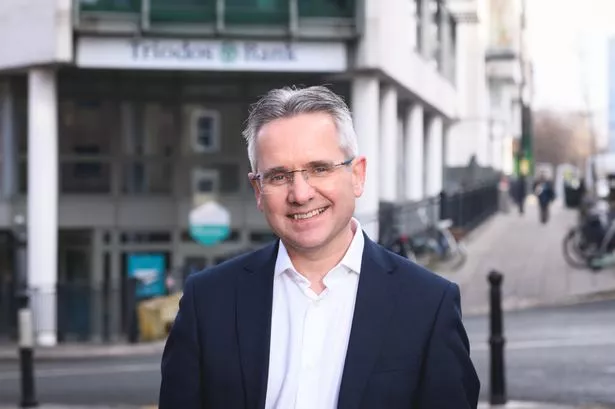
Ethical bank Triodos has appointed a new chief executive in the UK. Mark Clayton joined the Bristol-headquartered company last year as its chief operating officer and is expected to take up the post in early summer. He will succeed Dr Bevis Watts, who announced last October that he would step down after nearly a decade at the helm. Mr Clayton, who was previously chief operating officer at Unity Trust Bank, had a 23-year career at HSBC, where he held various senior roles and led large teams within the retail banking division. Gary Page, chair of Triodos Bank UK, recently re-appointed as chair for a final term of three years, said: “It was crucial for us to find a new CEO with the right values and passion for ethical and sustainable banking, as well as a strong understanding of our customers and a rapidly changing banking landscape. "Mark has made a really positive impact since joining Triodos and we are confident he is the right person to lead the bank forward and deliver the impact we want to have. My thanks go to Bevis for his contribution over many years and for his commitment to assist in the smooth transition over the coming months. We wish him well for the future.” Mr Clayton said he was driven by a "strong desire to protect the world" and was "hugely honoured" to be given the top job at Triodos. "I am excited for the opportunities ahead at Triodos Bank UK," he said. "We have an excellent leadership team in place working to deliver on our mission of making money work for positive change in society." Triodos Bank UK, a certified B Corporation, has more 300 staff based in Bristol headquarters, as well as offices in London and Edinburgh. With a balance sheet of approximately £2bn, the bank is well known for financing UK pioneers in sustainability.

Read more
Investors pile into gold as Trump's tariff turmoil continues

The price of gold has soared to another record peak, fuelled by concern over President Donald Trump's tariff strategy and a weakening dollar, leading investors towards the traditional sanctuary of precious metals. Gold's value ascended 1.5% to surpass $3,200 (£2,451) per troy ounce on Friday – an unprecedented level – as Asian markets stumbled due to the ongoing repercussions of President Trump's deferred tariff measures, as reported by City AM. Despite its status as a refuge for capital during turbulent times, the precious metal had initially been swept up in a severe sell-off amid tariff-driven market chaos. Gold spot prices experienced a remarkable increase of over 30% since the beginning of 2024 but witnessed a downturn from $3,166/oz to $2,973/oz from April 2 to April 6. Market experts believe that investors were compelled to sell their gold assets to cover margin calls from creditors. Pepperstone analyst Michael Brown pointed to the removal of the "risk premium" associated with gold after its exclusion from the postponed tariffs Trump labeled ‘Liberation Day’ as the cause of the brief dip. Nevertheless, from April 6 onward, gold has bounced back robustly, registering its most significant bi-day surge since 2020 and reaching a new all-time high. Market strategists have attributed this latest rally to the faltering US dollar – which renders the metal more accessible to buyers using other currencies – and predictions that central banks might accelerate interest rate cuts more than previously presumed to prevent an economic deceleration. This week has seen the dollar descend to its lowest level against major global currencies in a decade. Dominic Schinder of UBS Global Wealth informed Bloomberg TV that further rate cuts from the Federal Reserve would provide another "leg up" for gold, as the yield on holding cash – a common refuge amid prevalent bearish sentiment – is lower. This rally boosted London-listed gold miners, leading the FTSE 100 higher on Friday morning. Fresnillo saw an increase of approximately 5.9 per cent, while Endeavour experienced a surge of over 4.5 per cent in early trades. Brokers at Peel Hunt upgraded precious-metal-miner Fresnillo from 'hold' to 'add' in a note, suggesting that sustained high gold and silver prices would generate more cash flow at the commodities giant. "[The first quarter] saw gold and silver prices well ahead of expectations on rising market uncertainty," they noted. "The extreme US tariff announcements simply added to this uncertainty.

Read more
Lloyds Banking Group to transform head office with £200m investment

Lloyds Banking Group is set to pour £200m into the revamp of the Scottish Widows headquarters, making it the financial giant's primary hub in Scotland. The renovation of the Port Hamilton building on Morrison Street, Edinburgh, executed in collaboration with Drum Property Group, pledges to bolster Lloyds' presence in the Scottish capital where approximately 10,000 staff are based, as reported by City AM. For nearly three decades, the building has served as the core office of Scottish Widows and is expected to retain its role post-upgrade in 2027, continuing to oversee pensions and investments. This eight-storey property, spanning 325,000 sq ft and known for its distinctive curved roof, stands out as an iconic edifice in Edinburgh’s financial district. According to Lloyds, this initiative is part of a broader commitment to cultivate a more sustainable and environmentally friendly office network across the UK, advancing towards their net zero ambitions. This endeavour aligns with the group's previous movements, including last year's full refurbishment of the Bristol office and relocation to Leeds’ most eco-efficient office space. However, earlier this month, City AM detailed Lloyds’ plans to shutter its Liverpool facility later this year, a decision affecting around 500 employees. This closure is seen as part of a wider strategy to maintain "fewer, better-equipped" offices and streamline operational costs. In a statement, Lloyds confirmed that no jobs have been cut as part of the closure plans. Instead, employees at the office will be asked to relocate to its Cawley House office in Chester. The bank added that 80 per cent of employees based in Speke are currently working remotely or will be doing so when the building closes. This news follows reports that senior staff at Lloyds Bank may face bonus cuts if they do not attend the office at least twice a week. Chira Barua, CEO of Scottish Widows, commented: "There’s a real buzz in the fintech scene in Scotland and we’re committed to staying right in the centre of it." He further stated: "We’ve made huge progress in connecting customers with their financial futures and we’re starting to see how powerful digital engagement and gamification will be in the future." He also noted the potential to make a significant difference for customers, saying: "There’s huge potential to help make a real difference for our customers’ lives and we’re right out in front building all the parts we need to innovate in a massive way." Sharon Doherty, chief people and places officer at Lloyds Banking Group, added: "We’re creating modern, inclusive, sustainable and fun workplaces where our people love to work." She also mentioned the improvements made to their offices across the UK, stating: "We’ve already made significant improvements to our offices across the UK, with more to come." "And our redesigned home in the centre of Edinburgh will help us connect, collaborate and spark the creativity to deliver great outcomes for our customers." Graeme Bone, group managing director at Drum Property Group, commented on the £200m redevelopment of Port Hamilton as "The £200m redevelopment of Port Hamilton presents an exceptional opportunity for Lloyds Banking Group to upgrade and enhance one of Edinburgh’s landmark buildings and deliver an exceptional working environment for Lloyds colleagues in an unrivalled location."

Read more
ECB and Fed rate decisions to underscore economic divergence between Europe and the US

Markets are gearing up for a busy week as they anticipate central bank announcements, with interest rate decisions due from both the US Federal Reserve and the European Central Bank (ECB). The upcoming decisions are set to underscore the divergent economic perspectives between the two regions, with the ECB likely to slash borrowing costs for the fifth consecutive time, while the Fed is expected to maintain rates, as reported by City AM. In December, the Federal Open Market Committee (FOMC) trimmed rates by 25 basis points and indicated that only two rate cuts would occur in 2025. However, investor expectations for further rate reductions in the US have moderated in recent weeks, despite ongoing progress on inflation. This shift in sentiment is attributed to concerns about the inflationary effects of Donald Trump's economic policies and the persistent robustness of the US economy. "We expect the strength of the economy and uncertainty over immigration and trade policy to prompt the Fed to pause its easing cycle," commented Bradley Saunders, North America economist at Capital Economics. Data released the day after the Fed's meeting is projected to reveal that the US economy expanded at an annualised rate of 2.7 percent in the fourth quarter. Considering these factors, most traders are now predicting just one rate cut, with some even speculating that the Fed might increase rates again in the near future. Chair Jerome Powell is expected to face numerous questions about the outlook for rates in his upcoming press conference, especially considering President Trump's insistence on lower interest rates. BNP Paribas analysts predict that Powell will also be questioned about the "tail risk of rate hikes." They anticipate a cautious response from him, suggesting rate hikes are less likely but could be considered if necessary to ensure a soft landing for inflation and growth. This contrasts sharply with the economic outlook for the ECB. ING's global head of macro, Carsten Brzeski, believes a rate cut is a "no-brainer" given the weak growth outlook. Despite the ECB cutting rates four times in 2024, bringing the benchmark interest rate down to three per cent, Brzeski argues this is still too high. He stated: "The deposit interest rate is still restrictive and too restrictive for the eurozone economy’s current weak state," Economic growth figures due on Thursday are predicted to show a mere 0.1 per cent increase in the fourth quarter, significantly weaker than the US. The IMF's latest forecasts suggest that the US will grow by 1.9 per cent next year, while the euro area will only grow by 1.0 per cent. Given such a weak growth outlook, traders are anticipating four or five rate cuts from the ECB this year, despite some signs of building inflationary pressures.

Read more

advertisement